R2 — Autonomous Navigation & Decision System
A competition robot has seconds to decide what to go for and how to get there. R2 is the layer that makes that choice — sense, prioritise, plan, move.
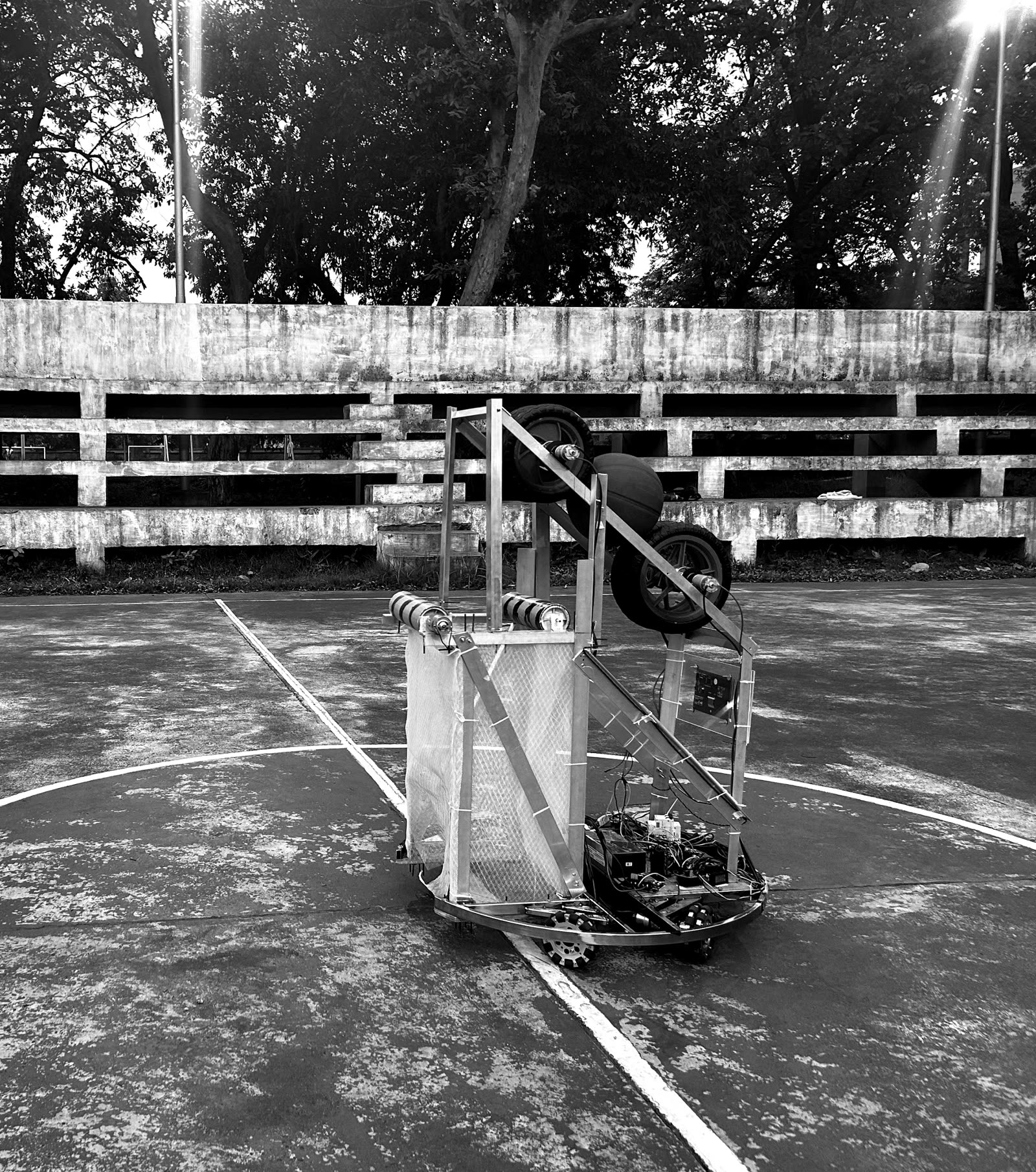
Choosing well beats moving fast
In a Robocon match the robot is rarely short of things it could do. It is short of time. The scoring difference between a fast robot and a good one is usually the decision layer: which target, in what order, by which route.
R2 is that layer — the navigation and decision system for the competition robot, taking it from sensed surroundings to a committed path.
Sense, prioritise, plan
- Remote sensing to build a picture of the field and the available targets.
- Priority-based target selection — candidates are ranked rather than taken in the order they are found, so the robot commits to the target that is worth committing to.
- A* pathfinding to route to the chosen target around obstacles, instead of driving straight at it.
Simulated first, then driven
Navigation logic that is only ever tested on the physical robot is expensive to iterate on — every bug costs a rebuild and a battery. The system was validated in simulation first, so the decision and planning behaviour could be exercised repeatedly before it touched hardware, and performance improvements could be measured rather than guessed at.
Robocon 2025 — Finalist, IIT Delhi
The robot this system runs on reached the Robocon 2025 final at IIT Delhi. Alongside the navigation work I led the team's embedded and software development and built the computer vision model for rim detection on the competition robot.
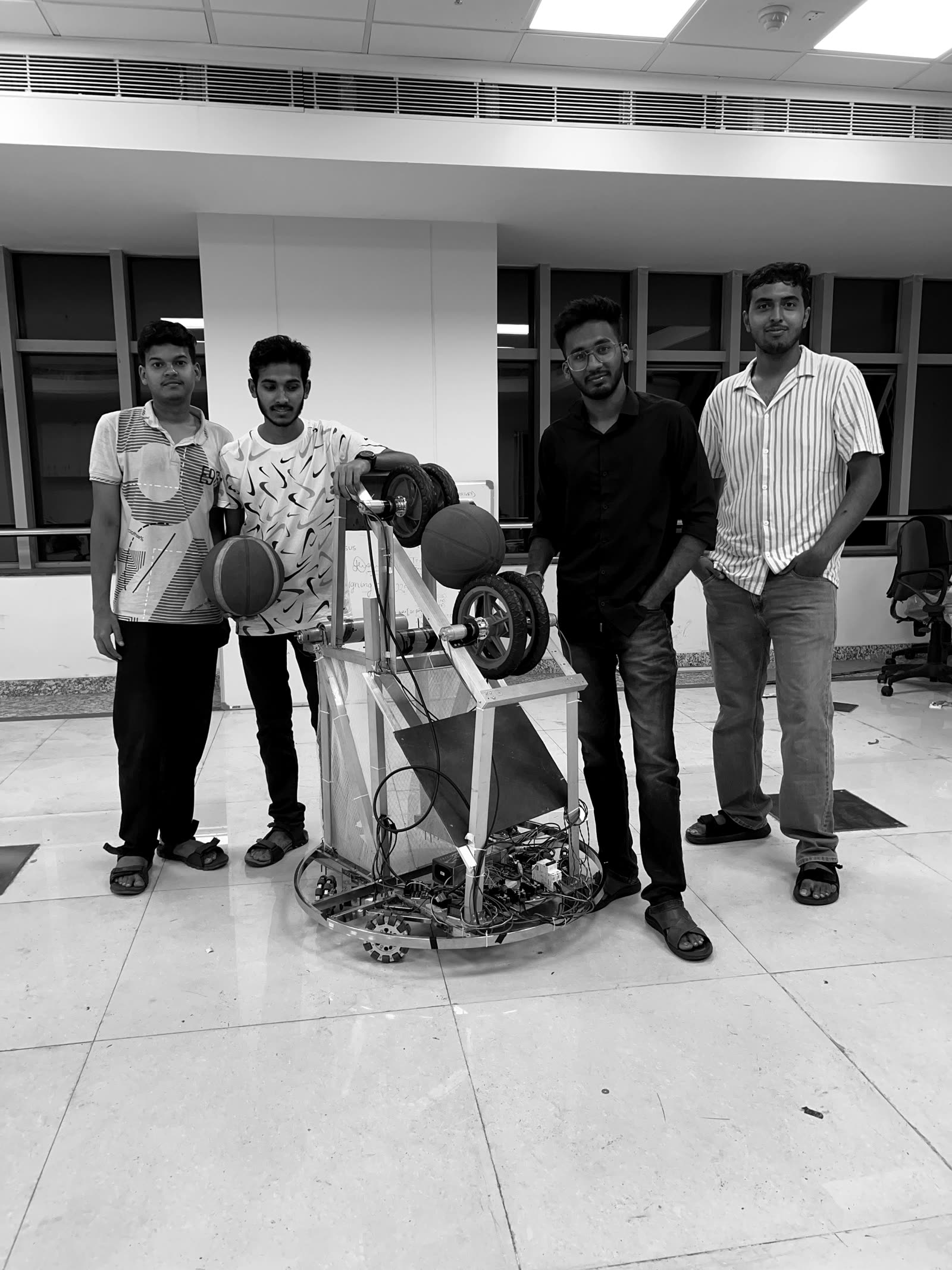
The robot
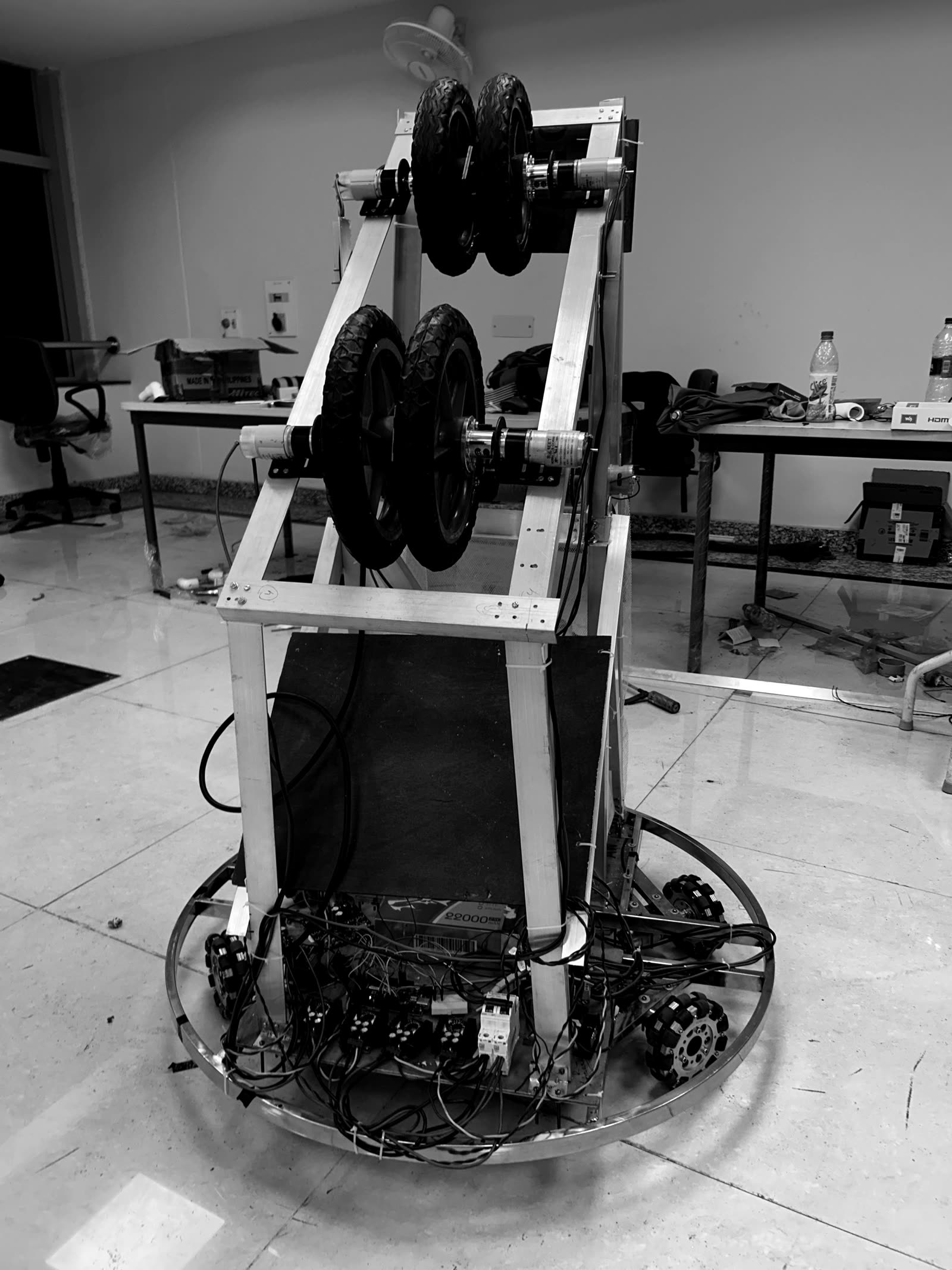
An omni-wheel base carrying a two-stage roller launcher, built in the RoboCell lab and driven on the court it was designed for.
Planning
- A* search
- Path planning
- Priority selection
Robotics
- Remote sensing
- Embedded control
Validation
- Simulation